


Vibrations in Sound Healing: What Happens When Sound Meets the Brain?
Home Our Blog Vibrations in Sound Healing: What Happens When Sound Meets the Brain?Search Post

If You Need Any Help
Contact With Us
Have you ever noticed how one sound can instantly melt your shoulders away, while another makes you clench your jaw?
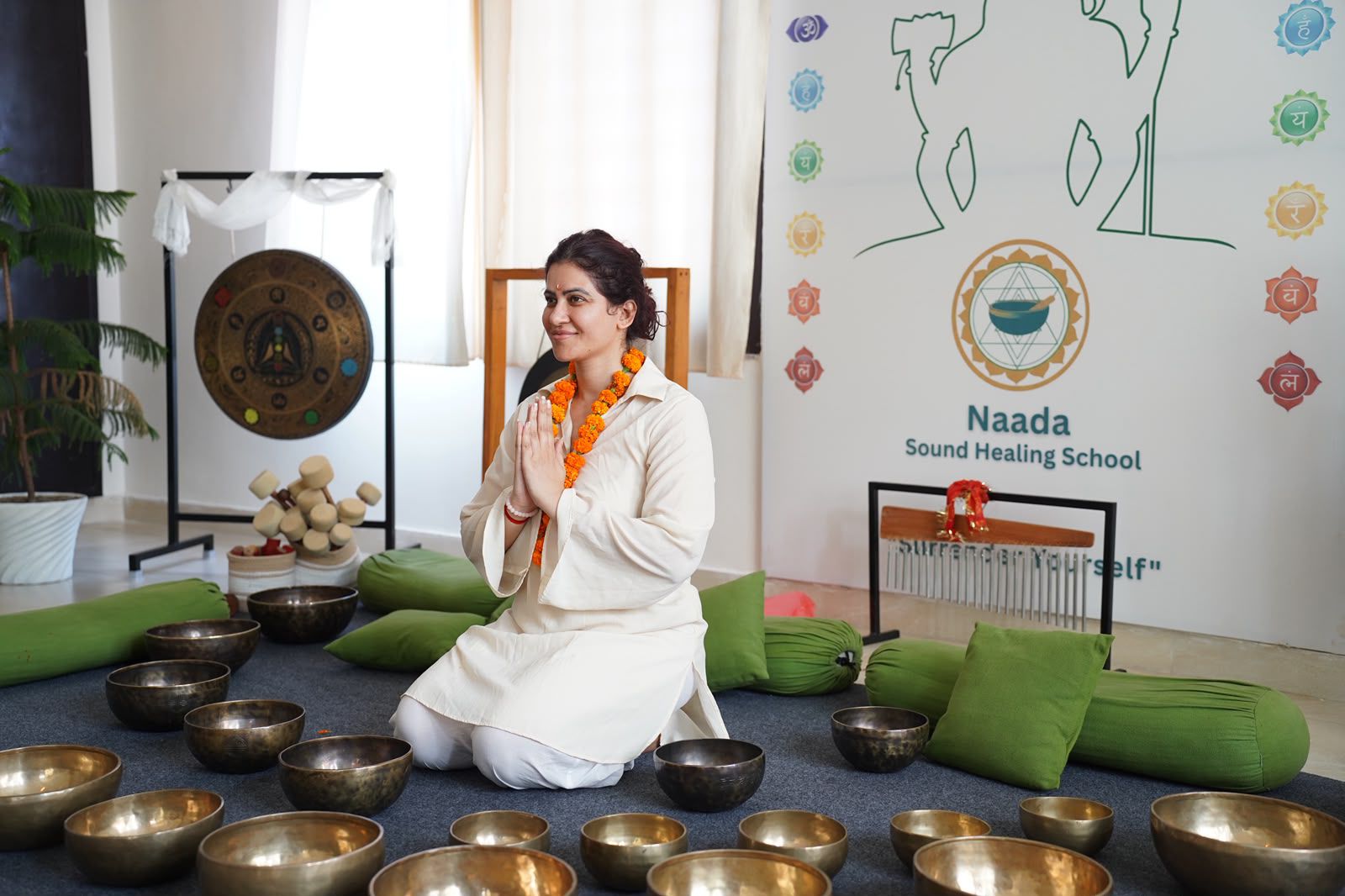
We don't just hear sound; our nervous system feels it. When you listen to singing bowls, gongs, or chimes, you’re dealing with physical waves of vibration. And because our bodies are mostly water and tissue, those vibrations move right through us, quietly shifting our breathing and our baseline tension.
That’s where things get really interesting, especially when we look at what’s happening upstairs in the brain.
Think of your brain as a radio dial that's always shifting frequencies:
- High Beta is that frantic, running-on-empty static when you're overwhelmed.
- Beta is your everyday, problem-solving hustle.
- Alpha is when you're finally breathing—relaxed, but still awake.
- Theta is that dreamy, half-asleep space where meditation and deep release happen.
- Delta is the heavy quiet of deep sleep.
- Gamma is your brain on hyper-drive—sudden bursts of insight, lightning-fast processing, and intense focus.
Normally, we bounce between these all day. But when your mind is racing, you're stuck hard in Beta.
So, what actually happens during a sound bath?
It’s not magic. When you're lying there listening to a gong or a crystal bowl, your brain gets something rare: a single, steady anchor. Instead of ping-ponging between emails, worries, and your to-do list, your attention latches onto the resonance.
Gong. Vibration. Silence.
Bowl. Vibration. Silence.
People love to talk about "brainwave entrainment" like playing a certain frequency is a magic button that instantly forces your brain into Theta. Science is a bit more nuanced than that—just hearing a sound doesn't mean your brain automatically copies it.
Instead, sound healing works more like an invitation. It creates an environment safe enough for your nervous system to finally exhale and drop down a gear.
We spend so much of our lives stuck in "doing" mode—planning, fixing, reacting. Sound asks us to do something terrifyingly simple: just listen.
And sometimes, as the last wave of a singing bowl fades into silence, you realize your thoughts aren't spinning quite so fast anymore. Maybe sound healing isn't about escaping your busy mind at all. Maybe it's just discovering what happens when, for a few quiet minutes, your thoughts don't demand every ounce of your attention.
Disclaimer: Sound healing is a complementary wellness practice and does not replace professional medical advice, diagnosis, treatment or prescribed medication.
Read More Our Blogs
You Can Love Your Life and Still Want Something Different
Have you ever felt happy with where you are in life, yet quietly wished for something more?
Learn more
Your Body Remembers Stress, Even When Your Mind Moves On
Ever noticed how your shoulders feel tense after a long day, even when everything seems fine?
Quick Links
Important Links
© Copyright 2026 - Heal Witth Ahaana. All Right Reserved | Developed By HRM InfoSec